Neurocomputing is a peer-reviewed scientific journal covering research on artificial intelligence, machine learning, and neural computation. It was established in 1989 and is published by Elsevier. The editor-in-chief is Zidong Wang (Brunel University London). Independent scientometric studies noted that despite being one of the most productive journals in the field, it has kept its reputation across the years intact and plays an important role in leading the research in the area. The journal is abstracted and indexed in Scopus and Science Citation Index Expanded. According to the Journal Citation Reports, its 2023 impact factor is 5.5.
Language identification
In natural language processing, language identification or language guessing is the problem of determining which natural language a given content is in. Computational approaches to this problem view it as a special case of text categorization, solved with various statistical methods. == Overview == === Logical approach === A common non-statistical intuitive approach (though highly uncertain) is to look for common letter combinations, or distinctive diacritics or punctuation. === Statistical approach === There are several statistical approaches to language identification. An older statistical method by Grefenstette was based on the frequency of short n-grams, which are often function morphemes. For example, "ing" is more common in English than in French, while the sequence "que" is more common in French. Given a new page found on the Web, one counts the number of occurrences of each such short sequence and picks the language whose frequency table it matches the most. One technique is to compare the compressibility of the text to the compressibility of texts in a set of known languages. This approach is known as mutual information based distance measure. The same technique can also be used to empirically construct family trees of languages which closely correspond to the trees constructed using historical methods. Mutual information based distance measure is essentially equivalent to more conventional model-based methods and is not generally considered to be either novel or better than simpler techniques. Another technique, as described by Cavnar and Trenkle (1994) and Dunning (1994) is to create a language n-gram model from a "training text" for each of the languages. These models can be based on characters (Cavnar and Trenkle) or encoded bytes (Dunning); in the latter, language identification and character encoding detection are integrated. Then, for any piece of text needing to be identified, a similar model is made, and that model is compared to each stored language model. The most likely language is the one with the model that is most similar to the model from the text needing to be identified. This approach can be problematic when the input text is in a language for which there is no model. In that case, the method may return another, "most similar" language as its result. Also problematic for any approach are pieces of input text that are composed of several languages, as is common on the Web. As of 2025, a commonly used baseline method is via the fastText library, which has comparable classification accuracy as deep learning techniques, but much faster. == Identifying similar languages == One of the great bottlenecks of language identification systems is to distinguish between closely related languages. Similar languages like Bulgarian and Macedonian or Indonesian and Malay present significant lexical and structural overlap, making it challenging for systems to discriminate between them. In 2014 the DSL shared task has been organized providing a dataset (Tan et al., 2014) containing 13 different languages (and language varieties) in six language groups: Group A (Bosnian, Croatian, Serbian), Group B (Indonesian, Malaysian), Group C (Czech, Slovak), Group D (Brazilian Portuguese, European Portuguese), Group E (Peninsular Spanish, Argentine Spanish), Group F (American English, British English). The best system reached performance of over 95% results (Goutte et al., 2014). Results of the DSL shared task are described in Zampieri et al. 2014. == Software == Apache OpenNLP includes char n-gram based statistical detector and comes with a model that can distinguish 103 languages Apache Tika contains a language detector for 18 languages
Token maxxing
Token Maxxing or Token Maxing is a metric used in an attempt to track productivity in the workplace especially for those using Artificial Intelligence (AI) based services. AI services charge for each token which represent units of effort expended by an AI service to solve a problem. Some believe that token consumption equates to productivity and thus can be used as a metric to monitor an employee's work. Supporters believe that higher token usage indicates higher productivity and higher utilization of powerful AI services. This also suggests that those not consuming enough tokens may be less productive and underutilizing powerful AI services. This belief might lead to an environment that incentivizes higher token usage to predict increased productivity. Critics of token maxxing as a metric claim that prudent workers will maximize any metric that management wants increased to gain a workplace advantage. For example: Engineers in the tech industries pressed to consume as many tokens as possible might run several AI agents in tandem, enter longer input prompts, or automate their tasks to maximize their token consumption. To management, this higher token usage may indicate potential productivity, but in reality may cause additional token costs, worker burnout, or actually create more bloated code of lower quality. Another claim is AI service companies potentially benefit from such an emphasis on token consumption and actively encourage the trend. Some developers have publicly advocated the practice. Developer Sigrid Jin, who said he used 50 billion tokens in a single year, has argued that maximizing token consumption is the best way to understand the value of AI, advising others to spend as much on AI usage as they pay in rent to obtain a return on investment. == See Also == Goodhart's law Perverse incentive Jevons Paradox
Machine learning
Machine learning (ML) is a field of study in artificial intelligence concerned with the development and study of statistical algorithms that can learn from data and generalize to unseen data, and thus perform tasks without being explicitly programmed. Advances in the field of deep learning have allowed neural networks, a class of statistical algorithms, to surpass many previous machine learning approaches in performance. Statistics and mathematical optimisation methods compose the foundations of machine learning. Data mining is a related field of study, focusing on exploratory data analysis (EDA) through unsupervised learning. From a theoretical viewpoint, probably approximately correct learning provides a mathematical and statistical framework for describing machine learning. Most traditional machine learning and deep learning algorithms can be described as empirical risk minimisation under this framework. == History == The term machine learning was coined in 1959 by Arthur Samuel, an IBM employee and pioneer in the field of computer gaming and artificial intelligence. The synonym self-teaching computers was also used during this time period. The earliest machine learning program was introduced in the 1950s, when Samuel invented a computer program that calculated the chance of winning in checkers for each side, but the history of machine learning is rooted in decades of efforts to study human cognitive processes. In 1949, Canadian psychologist Donald Hebb published the book The Organization of Behavior, in which he introduced a theoretical neural structure formed by certain interactions among nerve cells. The Hebbian theory of neuron interaction set the groundwork for how many machine learning algorithms work, with connected artificial neurons changing the strength of their connections based on data. Other researchers who have studied human cognitive systems contributed to the modern machine learning technologies as well, including Walter Pitts and Warren McCulloch, who proposed the first mathematical model of neural networks including algorithms that mirror human thought processes. By the early 1960s, an experimental "learning machine" with punched tape memory, called Cybertron, had been developed by Raytheon Company to analyse sonar signals, electrocardiograms, and speech patterns using rudimentary reinforcement learning. It was repetitively "trained" by a human operator/teacher to recognise patterns and equipped with a "goof" button to cause it to reevaluate incorrect decisions. A representative book on research into machine learning during the 1960s was Nils Nilsson's book "Learning Machines", dealing mostly with machine learning for pattern classification. Interest related to pattern recognition continued into the 1970s, as described by Duda and Hart in 1973. In 1981, a report was given on using teaching strategies so that an artificial neural network learns to recognise 40 characters (26 letters, 10 digits, and 4 special symbols) from a computer terminal. Tom M. Mitchell provided a widely quoted, more formal definition of the algorithms studied in the machine learning field: "A computer program is said to learn from experience E with respect to some class of tasks T and performance measure P if its performance at tasks in T, as measured by P, improves with experience E." This definition of the tasks in which machine learning is concerned is fundamentally operational rather than defining the field in cognitive terms. This follows Alan Turing's proposal in his paper "Computing Machinery and Intelligence", in which the question, "Can machines think?", is replaced by asking whether machines can convincingly imitate a human in its responses to human-posed questions. In 2014 Ian Goodfellow and others introduced generative adversarial networks (GANs) which could produce realistic synthetic data. By 2016 AlphaGo had won against top human players in Go using reinforcement learning techniques. == Relationships to other fields == === Artificial intelligence === As a scientific endeavour, machine learning grew out of the quest for artificial intelligence (AI). In the early days of AI as an academic discipline, some researchers were interested in having machines learn from data. They attempted to approach the problem with various symbolic methods, as well as what were then termed "neural networks"; these were mostly perceptrons and other models that were later found to be reinventions of the generalised linear models of statistics. Probabilistic reasoning was also employed, especially in automated medical diagnosis. However, an increasing emphasis on the logical, knowledge-based approach caused a rift between AI and machine learning. Probabilistic systems were plagued by theoretical and practical problems of data acquisition and representation. By 1980, expert systems had come to dominate AI, and statistics was out of favour. Work on symbolic/knowledge-based learning continued within AI, leading to inductive logic programming (ILP), but the more statistical line of research was now outside the field of AI proper, in pattern recognition and information retrieval. Neural network research was abandoned by AI and computer science around the same time. This subfield, termed "connectionism", was continued by researchers from other disciplines, including John Hopfield, David Rumelhart, and Geoffrey Hinton. Their main success came in the mid-1980s with the reinvention of backpropagation. Machine learning (ML), reorganised and recognised as its own field, started to flourish in the 1990s. The field changed its goal from achieving artificial intelligence to tackling solvable problems of a practical nature. It shifted focus away from the symbolic approaches it had inherited from AI, and toward methods and models borrowed from statistics, fuzzy logic, and probability theory. === Data compression === === Data mining === Machine learning and data mining often employ the same methods and overlap significantly, but while machine learning focuses on prediction based on known properties learned from the training data, data mining focuses on the discovery of previously unknown properties in the data (this is the analysis step of knowledge discovery in databases). Data mining uses many machine learning methods, but with different goals; on the other hand, machine learning also employs data mining methods as "unsupervised learning" or as a preprocessing step to improve learner accuracy. Much of the confusion between these two research communities comes from the basic assumptions they work with: in machine learning, performance is usually evaluated with respect to the ability to reproduce known knowledge, while in knowledge discovery and data mining (KDD) the key task is the discovery of previously unknown knowledge. Evaluated with respect to known knowledge, an uninformed (unsupervised) method will easily be outperformed by other supervised methods, while in a typical KDD task, supervised methods cannot be used due to the unavailability of training data. Machine learning also has intimate ties to optimization: Many learning problems are formulated as minimisation of some loss function on a training set of examples. Loss functions express the discrepancy between the predictions of the model being trained and the actual problem instances (for example, in classification, one wants to assign a label to instances, and models are trained to correctly predict the preassigned labels of a set of examples). === Generalization === Characterizing the generalisation of various learning algorithms is an active topic of current research, especially for deep learning algorithms. === Statistics === Machine learning and statistics are closely related fields in terms of methods, but distinct in their principal goal: statistics draws population inferences from a sample, while machine learning finds generalisable predictive patterns. Conventional statistical analyses require the a priori selection of a model most suitable for the study data set. In addition, only significant or theoretically relevant variables based on previous experience are included for analysis. In contrast, machine learning is not built on a pre-structured model; rather, the data shape the model by detecting underlying patterns. The more variables (input) used to train the model, the more accurate the ultimate model will be. Leo Breiman distinguished two statistical modelling paradigms: the data model and the algorithmic model, wherein "algorithmic model" means more or less the machine learning algorithms like Random forest. Some statisticians have adopted methods from machine learning, producing the field of statistical learning. === Statistical physics === Analytical and computational techniques derived from deep-rooted physics of disordered systems can be extended to large-scale problems, including machine learning, e.g., to analyse the weight space of deep neural networks. Statistical physics is thus
Personoid
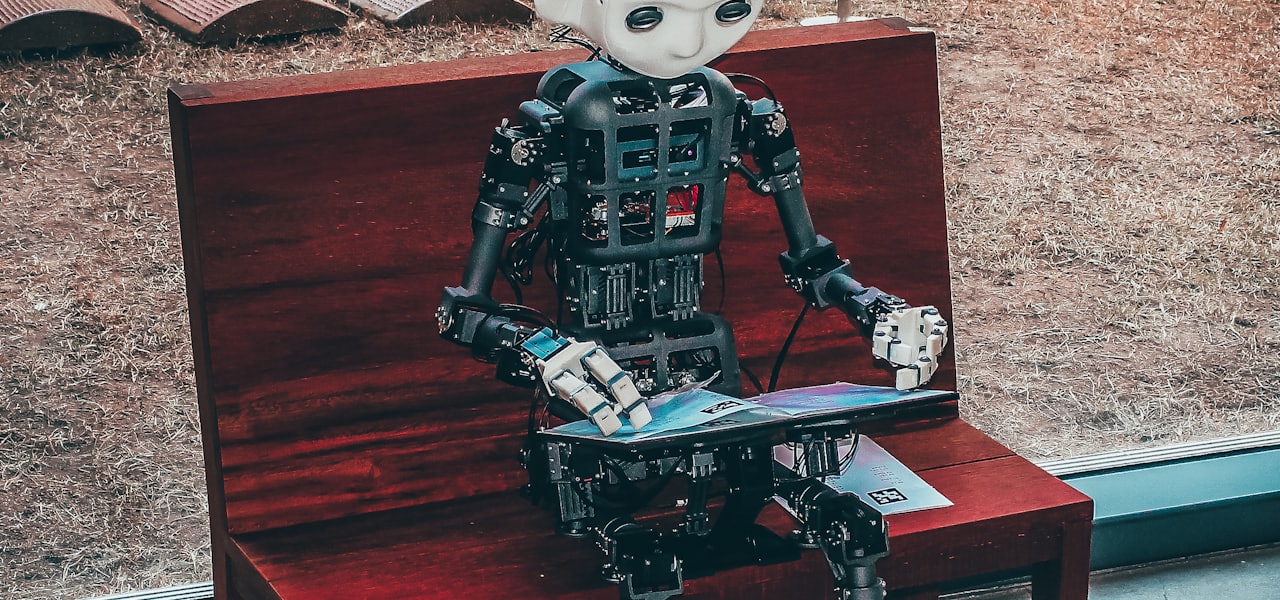
Personoid is the concept coined by Stanisław Lem, a Polish science-fiction writer, in Non Serviam, from his book A Perfect Vacuum (1971). His personoids are an abstraction of functions of human mind and they live in computers; they do not need any human-like physical body. In cognitive and software modeling, personoid is a research approach to the development of intelligent autonomous agents. In frame of the IPK (Information, Preferences, Knowledge) architecture, it is a framework of abstract intelligent agent with a cognitive and structural intelligence. It can be seen as an essence of high intelligent entities. From the philosophical and systemics perspectives, personoid societies can also be seen as the carriers of a culture. According to N. Gessler, the personoids study can be a base for the research on artificial culture and culture evolution. == Personoids on TV and cinema == Welt am Draht (1973) The Thirteenth Floor (1999)
Turret lathe
A turret lathe is a form of metalworking lathe that is used for repetitive production of duplicate parts, which by the nature of their cutting process are usually interchangeable. It evolved from earlier lathes with the addition of the turret, which is an indexable toolholder that allows multiple cutting operations to be performed, each with a different cutting tool, in easy, rapid succession, with no need for the operator to perform set-up tasks in between (such as installing or uninstalling tools) or to control the toolpath. The latter is due to the toolpath's being controlled by the machine, either in jig-like fashion, via the mechanical limits placed on it by the turret's slide and stops, or via digitally-directed servomechanisms for computer numerical control lathes. The name derives from the way early turrets took the general form of a flattened cylindrical block mounted to the lathe's cross-slide, capable of rotating about the vertical axis and with toolholders projecting out to all sides, and thus vaguely resembled a swiveling gun turret. Capstan lathe is the usual name in the UK and Commonwealth, though the two terms are also used in contrast: see below, Capstan versus turret. == History == Turret lathes became indispensable to the production of interchangeable parts and for mass production. The first turret lathe was built by Stephen Fitch in 1845 to manufacture screws for pistol percussion parts. In the mid-nineteenth century, the need for interchangeable parts for Colt revolvers enhanced the role of turret lathes in achieving this goal as part of the "American system" of manufacturing arms. Clock-making and bicycle manufacturing had similar requirements. Christopher Spencer invented the first fully automated turret lathe in 1873, which led to designs using cam action or hydraulic mechanisms. From the late-19th through mid-20th centuries, turret lathes, both manual and automatic (i.e., screw machines and chuckers), were one of the most important classes of machine tools for mass production. They were used extensively in the mass production for the war effort in World War II. The U.S. company Warner & Swasey was one of the premier brands in heavy turret lathes between the 1910s and 1960s; it became the world's largest manufacturer of such lathes by 1928. During World War II, it employed 7,000 people and produced half of the turret lathes manufactured in the United States. == Types == There are many variants of the turret lathe. They can be most generally classified by size (small, medium, or large); method of control (manual, automated mechanically, or automated via computer (numerical control (NC) or computer numerical control (CNC)); and bed orientation (horizontal or vertical). === Archetypical: horizontal, manual === In the late 1830s a "capstan lathe" with a turret was patented in Britain. The first American turret lathe was invented by Stephen Fitch in 1845. The archetypical turret lathe, and the first in order of historical appearance, is the horizontal-bed, manual turret lathe. The term "turret lathe" without further qualification is still understood to refer to this type. The formative decades for this class of machine were the 1840s through 1860s, when the basic idea of mounting an indexable turret on a bench lathe or engine lathe was born, developed, and disseminated from the originating shops to many other factories. Some important tool-builders in this development were Stephen Fitch; Gay, Silver & Co.; Elisha K. Root of Colt; J.D. Alvord of the Sharps Armory; Frederick W. Howe, Richard S. Lawrence, and Henry D. Stone of Robbins & Lawrence; J.R. Brown of Brown & Sharpe; and Francis A. Pratt of Pratt & Whitney. Various designers at these and other firms later made further refinements. === Semi-automatic === Sometimes machines similar to those above, but with power feeds and automatic turret-indexing at the end of the return stroke, are called "semi-automatic turret lathes". This nomenclature distinction is blurry and not consistently observed. The term "turret lathe" encompasses them all. During the 1860s, when semi-automatic turret lathes were developed, they were sometimes called "automatic". What we today would call "automatics", that is, fully automatic machines, had not been developed yet. During that era both manual and semi-automatic turret lathes were sometimes called "screw machines", although we today reserve that term for fully automatic machines. === Automatic === During the 1870s through 1890s, the mechanically automated "automatic" turret lathe was developed and disseminated. These machines can execute many part-cutting cycles without human intervention. Thus the duties of the operator, which were already greatly reduced by the manual turret lathe, were even further reduced, and productivity increased. These machines use cams to automate the sliding and indexing of the turret and the opening and closing of the chuck. Thus, they execute the part-cutting cycle somewhat analogously to the way in which an elaborate cuckoo clock performs an automated theater show. Small- to medium-sized automatic turret lathes are usually called "screw machines" or "automatic screw machines", while larger ones are usually called "automatic chucking lathes", "automatic chuckers", or "chuckers". Such machine tools of the "automatic" variety, which in the pre-computer era meant mechanically automated, had already reached a highly advanced state by World War I. === Computer numerical control === When World War II ended, the digital computer was poised to develop from a colossal laboratory curiosity into a practical technology that could begin to disseminate into business and industry. The advent of computer-based automation in machine tools via numerical control (NC) and then computer numerical control (CNC) displaced to a large extent, but not at all completely, the previously existing manual and mechanically automated machines. Numerically controlled turrets allow automated selection of tools on a turret. CNC lathes may be horizontal or vertical in orientation and mount six separate tools on one or more turrets. Such machine tools can work in two axes per turret, with up to six axes being feasible for complex work. === Vertical === Vertical turret lathes have the workpiece held vertically, which allows the headstock to sit on the floor and the faceplate to become a horizontal rotating table, analogous to a huge potter's wheel. This is useful for the handling of very large, heavy, short workpieces. Vertical lathes in general are also called "vertical boring mills" or often simply "boring mills"; therefore a vertical turret lathe is a vertical boring mill equipped with a turret. == Other variations == === Capstan versus turret === The term "capstan lathe" overlaps in sense with the term "turret lathe" to a large extent. In many times and places, it has been understood to be synonymous with "turret lathe". In other times and places it has been held in technical contradistinction to "turret lathe", with the difference being in whether the turret's slide is fixed to the bed (ram-type turret) or slides on the bed's ways (saddle-type turret). The difference in terminology is mostly a matter of United Kingdom and Commonwealth usage versus United States usage. === Flat === A subtype of horizontal turret lathe is the flat-turret lathe. Its turret is flat (and analogous to a rotary table), allowing the turret to pass beneath the part. Patented by James Hartness of Jones & Lamson, and first disseminated in the 1890s, it was developed to provide more rigidity via requiring less overhang in the tool setup, especially when the part is relatively long. === Hollow-hexagon === Hollow-hexagon turret lathes competed with flat-turret lathes by taking the conventional hexagon turret and making it hollow, allowing the part to pass into it during the cut, analogously to how the part would pass over the flat turret. In both cases, the main idea is to increase rigidity by allowing a relatively long part to be turned without the tool overhang that would be needed with a conventional turret, which is not flat or hollow. === Monitor lathe === The term "monitor lathe" formerly (1860s–1940s) referred to the class of small- to medium-sized manual turret lathes used on relatively small work. The name was inspired by the monitor-class warships, which the monitor lathe's turret resembled. Today, lathes of such appearance, such as the Hardinge DSM-59 and its many clones, are still common, but the name "monitor lathe" is no longer current in the industry. === Toolpost turrets and tailstock turrets === Turrets can be added to non-turret lathes (bench lathes, engine lathes, toolroom lathes, etc.) by mounting them on the toolpost, tailstock, or both. Often these turrets are not as large as a turret lathe's, and they usually do not offer the sliding and stopping that a turret lathe's turret does; but they do offer the ability to index through successive tool
Symbol level
In knowledge-based systems, agents choose actions based on the principle of rationality to move closer to a desired goal. The agent is able to make decisions based on knowledge it has about the world (see knowledge level). But for the agent to actually change its state, it must use whatever means it has available. This level of description for the agent's behavior is the symbol level. The term was coined by Allen Newell in 1982. For example, in a computer program, the knowledge level consists of the information contained in its data structures that it uses to perform certain actions. The symbol level consists of the program's algorithms, the data structures themselves, and so on.